§ DIVISION Δ 002 · SPACE NEURA ORBITAL LEO · CONSTELLATIONS
EXTENDING · 2026

Decision quality
as an
orbital asset.

Orbit is drowning in alerts. Most conjunction warnings are false alarms — but every unnecessary maneuver burns propellant that can never be replaced. Neura Orbital carries the Volantyx decision architecture into space, separating real threats from noise so operators maneuver only when it matters.

Screening layer Autonomous
Designed for Constellation scale
Scroll
§ 01 — THE PROBLEM Congested orbits generate thousands of conjunction alerts. Propellant is finite. Panic is expensive. The bottleneck is no longer tracking — it is deciding.
§ 02 The stakes Every maneuver has a price

False alarms are a propellant tax.

A satellite's usable life is bounded by the fuel it carries. Each avoidance maneuver spends some of it — and most maneuvers respond to threats that would never have materialized. Better decisions are literally worth years of asset life.

Alert reality
Noise

The overwhelming majority of conjunction warnings resolve without any real collision risk — yet each one demands analysis and a decision.

Cost of caution
Fuel

Unnecessary maneuvers burn irreplaceable propellant and interrupt mission service — a compounding cost across a constellation.

Cost of error
Total

A single missed real threat can destroy an asset and cascade debris across an orbital regime for decades.

Operator load
Rising

Constellations are scaling faster than operations teams. Human-in-the-loop screening of every alert does not scale with them.

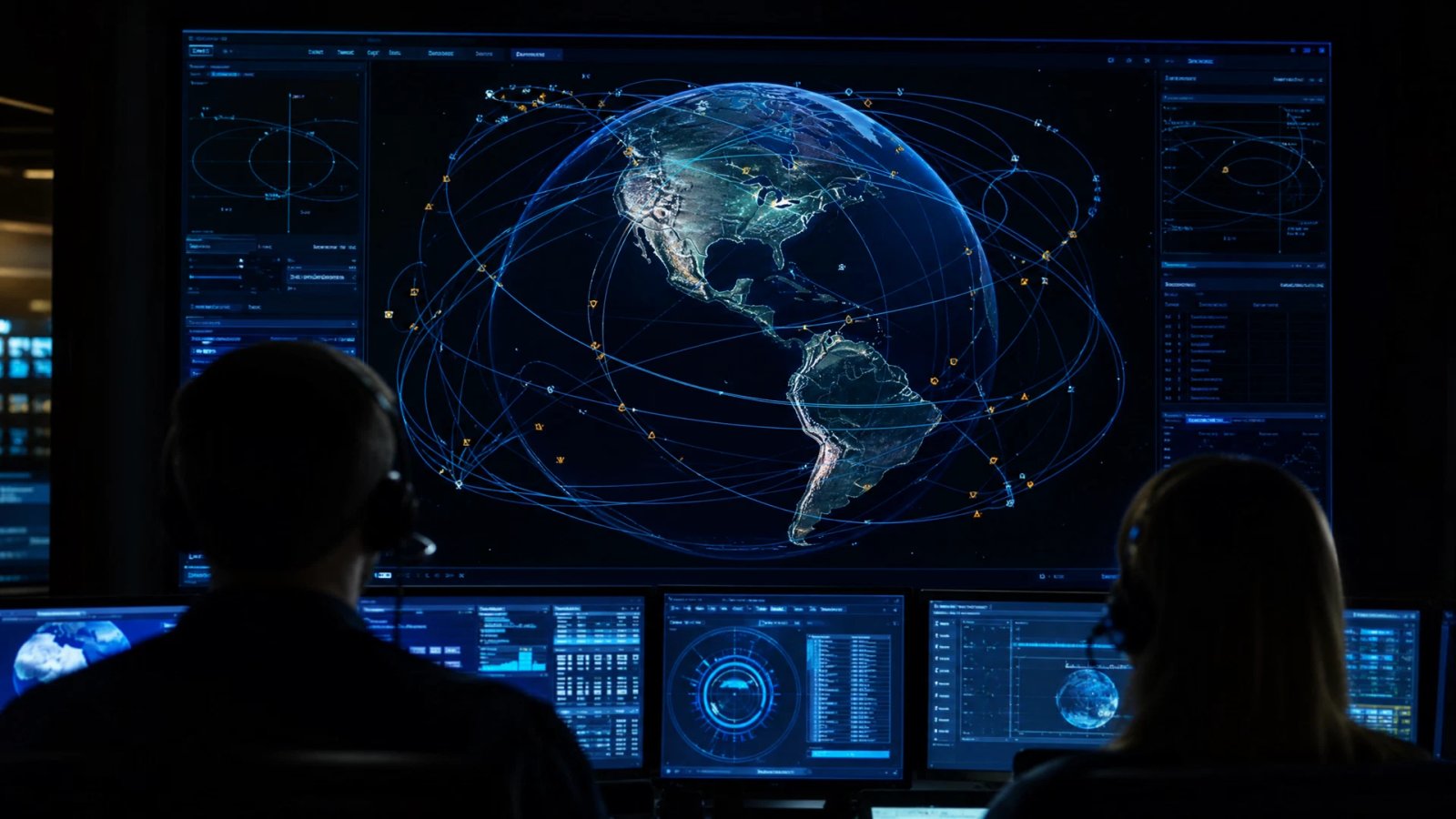
Orbital operations — conjunction screening at constellation scale
§ 03 · The capability

Screen the noise. Keep the fuel.

Neura Orbital applies the same decision architecture proven under adversarial conditions in contested airspace: fuse every available signal, assess risk probabilistically, and recommend action only when the evidence clears the threshold.

The result is a screening layer that sits between the alert stream and the operations team — ranking real risk, filtering false positives, and quantifying the propellant consequences of every candidate maneuver before it is taken.

HeritageVolantyx core
DeploymentOperator-side
Data postureSovereign
Scale unitConstellation
§ 04 How it works Alert → Decision → Asset life

From alert storm to a single answer.

Four stages between an incoming conjunction warning and a defensible, fuel-aware decision — each one automated, each one auditable.

STAGE 01
01 / 04

Ingest.

Conjunction data messages, ephemerides, space-weather conditions, and operator telemetry fused into one risk picture.

STAGE 02
02 / 04

Assess.

Probabilistic threat assessment separates genuine collision risk from statistical noise — with confidence bounds, not gut feel.

STAGE 03
03 / 04

Decide.

Candidate maneuvers are scored against propellant cost, service interruption, and downstream conjunction geometry.

STAGE 04
04 / 04

Preserve.

Operators act on ranked recommendations. Fuel is spent only on real threats — and every decision feeds the learning loop.

§ 05 Why it holds in orbit Same architecture · Harder environment

Built for the place you can't send a technician.

The disciplines that make the Volantyx platform survive contested airspace are exactly what orbit demands: autonomy at the edge, fused evidence, and decisions that don't wait on a link.

Principle · 01Latency
Edge
Edge-first intelligence
Screening logic runs where the decision is needed. Contact windows and ground-loop delays never gate a time-critical assessment.
Principle · 02Perception
Fusion
Multi-source fusion
Catalog data, owner ephemerides, and environmental signals combined into a single probabilistic risk picture per event.
Principle · 03Compounding
Loop
The flywheel
Every screened event sharpens the models — and federated learning moves that intelligence across the Volantyx platform without moving the data.
Neura Orbital · A Volantyx Aerospace division

Longer asset life starts with better decisions.

Satellite operators, constellation planners, and mission assurance teams: we are onboarding early partners now.